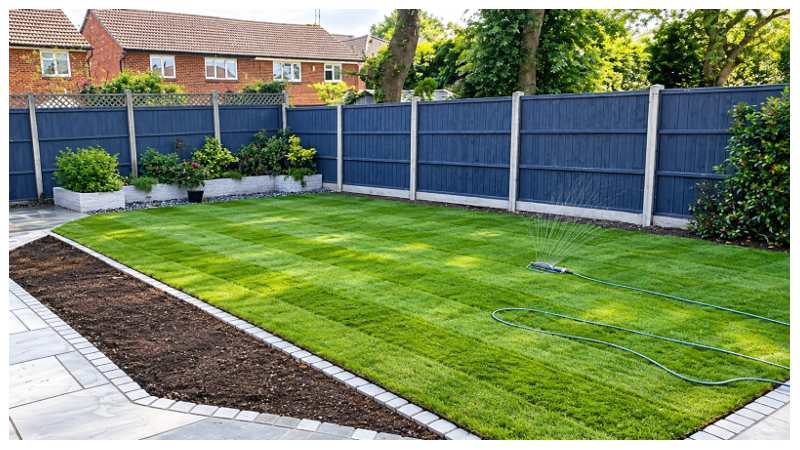
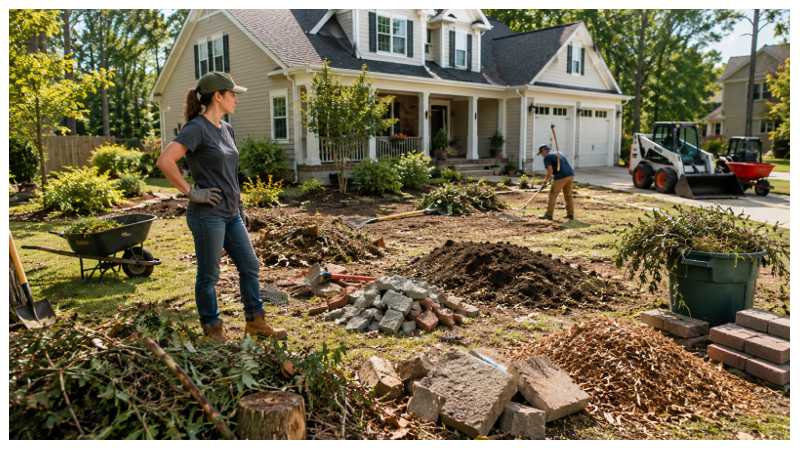
A successful landscaping project often begins with removal rather than installation. Before new planting beds, patios, walkways, drainage features, or lawns can be added, landscapers may need to clear shrubs, branches, old mulch, roots, damaged hardscape materials, edging, and other debris from the property.
Planning how those materials will be handled is an important part of preparing the site. An organized removal process keeps crews productive, protects areas that will remain, and creates enough working space for grading, soil preparation, and installation.
Evaluate Existing Site Conditions
Before clearing begins, walk the property and identify everything scheduled for removal. This may include unwanted vegetation, dead trees, old landscape fabric, fencing, pavers, decorative stone, rotting timbers, and accumulated yard debris.
The walkthrough should also identify features that must remain protected, including irrigation components, utilities, mature plants, drainage structures, patios, and neighboring property.
Knowing what stays and what goes helps crews establish clear boundaries before equipment arrives.
Estimate Debris Volume and Weight
Landscape removal can generate more material than expected. Mature shrubs expand into large piles after cutting, while roots and soil-covered plants can become surprisingly heavy.
Dense materials require additional planning. Stone, concrete, soil, sod, and old retaining-wall materials may reach practical weight limits even when the pile appears relatively small.
Estimating both volume and weight allows landscapers to select appropriate equipment and coordinate removal without interrupting later phases.
Separate Materials During Clearing
Sorting debris as it is removed is generally easier than separating one mixed pile at the end. Landscapers can keep branches and vegetation apart from soil, masonry, metal, plastic, and general trash.
Reusable materials should also have their own location. Healthy plants, intact pavers, decorative stone, and usable landscape timbers may sometimes be incorporated elsewhere on the property.
Early separation can also preserve recycling, composting, or reuse options that may disappear once materials become mixed together.
Establish a Central Staging Area
A defined staging area gives crews one primary destination for outgoing material. It should be reasonably close to the work while remaining accessible for loading or removal.
Avoid placing heavy piles over septic components, drainage structures, underground utilities, or areas that have already been prepared for new landscaping. The location should also remain clear of material deliveries and important equipment routes.
On large properties, smaller temporary piles can be consolidated into the main staging area periodically.
Process Bulky Vegetation
Branches, shrubs, vines, and small trees consume considerable space because of their irregular shapes. Cutting longer pieces into manageable sections can improve loading efficiency and simplify handling.
Chipping may be practical when large quantities of suitable woody vegetation are being removed. Chips may sometimes be reused on the property, depending on the material and landscaping plan.
Roots and stumps should generally remain separate because attached soil adds significant weight and makes them harder to process with ordinary brush.
Keep Heavy Debris Separate
Old patios, walkways, borders, and landscape structures may introduce concrete, brick, stone, and other dense materials into the project. These materials should be staged separately from lighter vegetation whenever possible.
Separate handling makes it easier to monitor load weight and choose suitable moving equipment. It may also allow clean masonry materials to be directed toward recycling or other appropriate facilities.
Mixing heavy materials throughout a brush pile usually makes both loading and disposal more complicated.
Protect Equipment Routes
Debris removal should not block the routes crews will need for grading, excavation, planting, or material deliveries. Driveways, gates, side yards, and primary equipment paths should remain open throughout site preparation.
As clearing progresses, temporary piles may need to be consolidated before crews move into another area. Allowing vegetation or demolition materials to spread into travel routes often creates unnecessary double handling.
Clear routes also reduce the chance of machinery driving across finished or sensitive areas.
Coordinate Removal Before Clearing Peaks
Waiting until all demolition and vegetation removal are finished can leave the site crowded at exactly the point when new materials need to arrive. Removal should instead be coordinated with the pace of clearing.
Waste Removal USA may be one option considered alongside local composting facilities, recycling centers, transfer stations, and yard-waste programs when a landscaping project generates substantial material.
Whatever method is selected, landscapers should understand acceptable materials, available capacity, weight restrictions, and pickup timing before large piles develop.
Plan Around Project Phases
Site preparation often moves quickly from clearing to grading and installation. Old vegetation may need to disappear before heavy equipment can shape the property, while hardscape debris should be removed before gravel, soil, or pavers arrive.
Scheduling cleanup around these transitions helps preserve working space. It also prevents outgoing debris from becoming mixed with new materials.
A clear site at the end of each phase makes it easier for the next crew or task to begin without delays.
Account for Weather
Rain can increase the weight of soil, sod, roots, leaves, and other organic debris. Soft ground may also make hauling equipment difficult to operate without damaging the property.
Wind creates different problems by spreading leaves, plastic, landscape fabric, and lightweight packaging. Loose materials should be contained when storms are expected.
Staging debris on firm, well-drained ground can reduce complications caused by changing weather.
Perform a Final Preparation Sweep
Once the major debris is cleared, crews should thoroughly inspect every area designated for the new landscape. Small roots, wire, fasteners, broken edging, plastic, rocks, and construction fragments may remain behind.
Drainage paths and irrigation components should also be checked before soil preparation begins. Staging areas may require raking or minor restoration after heavy materials are removed.
This final cleanup creates a more predictable surface for grading, planting, and hardscape installation.
Preparing a yard for new landscaping requires more than removing unwanted plants and structures. Landscapers need to consider material separation, debris weight, staging locations, equipment access, removal timing, and the requirements of the next construction phase.
Managing debris as clearing progresses keeps the property functional and reduces repeated handling. With an organized removal plan, crews can move efficiently from the old landscape to a clean, workable site that is ready for transformation.