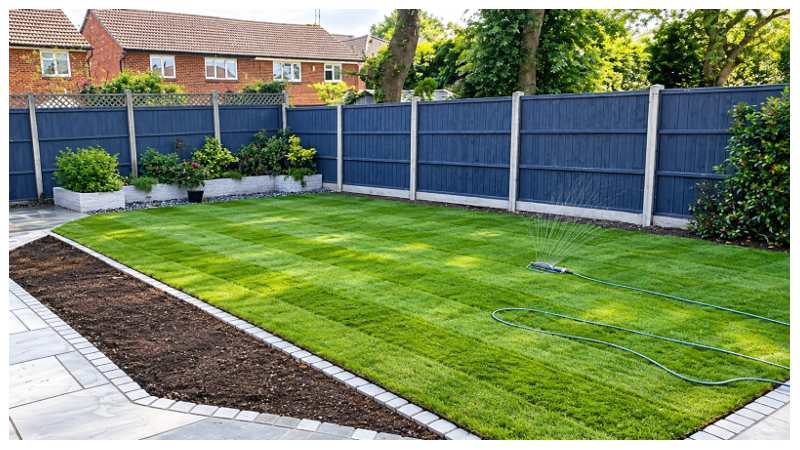
Finishing a landscaping project can feel like the hard part is done. Beds are planted, turf is laid, paths are set, and the finished space reflects the work that has gone into it.
Keeping it looking this way is a separate job, and it starts the moment the crew packs up. A newly landscaped yard is still settling, and the maintenance choices made in the first few months often decide whether the result holds up for years or needs correcting within a season.
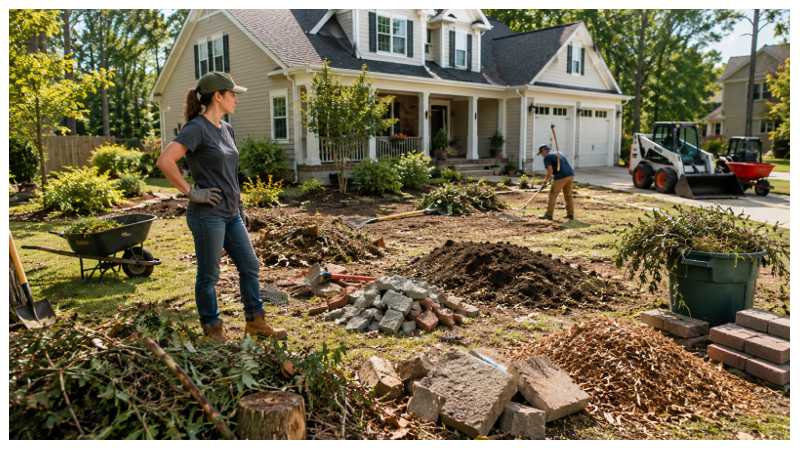
Our earlier guide on preparing a yard for new landscaping covered the clearing and staging work required before installation begins. The upkeep phase deserves equal planning.
The First Few Months After Landscaping Set the Tone
New turf behaves differently from an established lawn. Roots sit shallow, soil is loose, and grass blades are still adjusting to full sun and regular foot traffic. Fresh planting beds go through a similar adjustment, with root systems settling into soil disturbed during installation. Walking across new turf too often, parking equipment on it, or letting pets dig near young roots can undo weeks of establishment work in a single afternoon.
Hardscape elements go through their own grace period. Paving slabs, edging, and retaining walls may need several weeks to settle fully before regular heavy use. Allowing for this early settling period gives each element time to establish and tends to produce better long-term results.
Soil compaction is a common side effect of installation. Machinery, delivery vehicles, and repeated foot traffic press soil particles together and shrink the air and water space roots rely on. Puddles after light rain and thin, patchy turf are the usual signs. Light aeration once the lawn has established, usually during the following growing season, relieves compaction without disturbing young roots.
Watering and Feeding a New Lawn Correctly
New turf needs a different watering rhythm from an established lawn. Deep, frequent watering during the first two to three weeks helps roots establish, followed by a gradual shift toward less frequent watering meant to encourage those roots to grow downward. Watering too lightly and too often can keep roots shallow, leaving the lawn fragile once regular maintenance begins.
Laid turf and seeded areas need different care. Turf rolls require enough water to soak through to the soil beneath. Lifting a corner after a week shows whether the roots are gripping. Seeded areas need the top layer kept consistently damp until germination, which can mean several light waterings a day in dry weather. Early morning is the best time for both because less water evaporates and the grass dries before evening, lowering the risk of disease.
Feeding follows a similar logic. Early fertiliser applications should support root development over leaf growth, since a lawn pushed to grow quickly on top before its roots are established tends to struggle later. A starter fertiliser high in phosphorus suits the first application, and a balanced seasonal feed can follow once the lawn has taken its first few cuts.
Mowing a New Lawn Without Damaging It
Timing the first cut is significantly more important for new turf than for an established lawn. Most new grass is ready for its first mow once it reaches around 7 to 8 cm, about three inches, and cutting too early can pull young roots straight out of loose soil. Blade height should stay on the highest setting for the first several cuts, and removing more than a third of the blade length at once puts unnecessary stress on grass still finding its footing.
Grass type changes the timing. Ryegrass mixes common in UK lawns establish quickly and often reach cutting height four to six weeks after sowing, while fescue blends take longer. Turf laid during warm, growing weather usually takes its first cut after about two weeks, once roots have knitted into the soil. Sharp blades and dry grass both help, since dull blades tear young leaves.
Choosing Equipment to Match the New Layout
Freshly landscaped gardens rarely follow simple, rectangular lines. New borders, curved beds, and recently placed edging create a layout a standard push mower or ride-on struggles to follow cleanly, and the risk of clipping a bed edge or scalping a curve is higher while everything is still settling.
This is where a robotic mower earns its place. Segway Navimow mowers use app-drawn virtual boundaries instead of the buried boundary wires used by older robotic mowers, so they can follow an irregular new layout without trenching work. Adjustments as beds shift or expand over the first season take a few minutes in the app, with no new wire to bury.
Timing still matters here. A robotic lawn mower suits a lawn once turf has rooted and taken its first few manual cuts. Wheels on soft, newly laid ground leave marks, so the opening weeks call for a hand mower on a high setting, with the robotic mower joining the routine once the surface firms up.
Protecting New Planting Beds and Edges During Routine Maintenance
Edges are one of the most common casualties of early lawn maintenance. Traditional mowers’ wheels straying onto loose bed soil compact it before plants get a chance to root properly, and string trimmers used too close to new stems or trunks can girdle young plants without the damage showing immediately. Keeping a small buffer zone around new beds during the first season, even if it means slightly uneven edges at first, protects the investment already made in planting.
Mulch settles and thins over the first few months, so topping up bed edges keeps a clean line between soil and turf and blocks weeds from creeping in at the border.
A robot mower designed for a newly established lawn helps here too, since consistent, gentle passes along a mapped boundary reduce the wheel traffic and scalping caused by a single homeowner pushing a heavier mower along the same edge week after week.
Building a Long-Term Maintenance Routine
Once a lawn moves past establishment, usually around six to eight weeks after installation depending on grass type and season, maintenance can shift towards a standard seasonal routine. Mowing frequency increases, feeding follows a normal calendar, and watering can taper to match local rainfall. Aeration and overseeding, if needed, typically wait until the following season to give the original planting a full chance to establish first.
Seasons shape the calendar. Spring suits feeding and the first regular mowing schedule, summer calls for watering during dry spells and a slightly higher cut, and autumn is the best window for overseeding thin patches, since soil is warm and rainfall is reliable. A quick monthly walk around the yard to check for weeds, bare spots, and settled edging catches small problems before they grow.
Keeping a simple log of what was planted, when the first mow happened, and which areas needed extra care in the first season makes future maintenance decisions easier, especially if a different person ends up handling garden maintenance later.
Landscaping gets the attention during planning and installation, and maintenance quietly determines whether the work lasts. A yard given careful handling in its first season, from watering schedules to equipment choices suited to a still-changing layout, tends to reward homeowners with a lower-maintenance property for years afterward.