
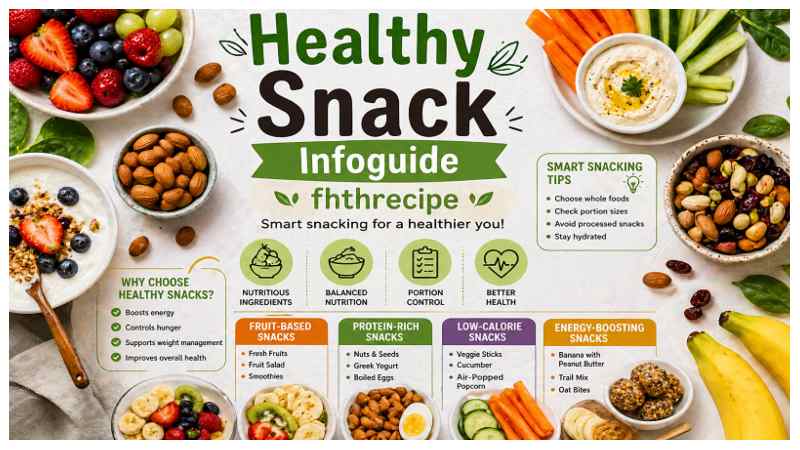
Snacking is a natural part of daily eating habits, but the type of snacks you choose can make a big difference in your overall health. Many people rely on processed snacks that are high in sugar, salt, and unhealthy fats. While these may be convenient, they often provide little nutritional value and can lead to low energy levels and poor health over time.
The purpose of this Healthy Snack Infoguide fhthrecipe is to help you understand how to choose better snack options that are both nutritious and satisfying. Healthy snacks do not need to be complicated or time-consuming. With simple ingredients and smart choices, you can enjoy snacks that support your health and fit easily into your daily routine.
In this guide, you will learn what healthy snacks are, why they are important, and how to prepare them using simple methods. You will also discover different types of snacks, practical ideas, and helpful tips to make healthy snacking a regular habit.
What Are Healthy Snacks?
Healthy snacks are foods that provide essential nutrients such as vitamins, minerals, protein, and fiber. Unlike processed snacks, which are often high in empty calories, healthy snacks contribute to your overall well-being.
A healthy snack should be balanced and include a combination of nutrients. For example, pairing carbohydrates with protein or healthy fats can help keep you full for longer. Fresh fruits, nuts, yogurt, and whole-grain options are common examples of healthy snacks.
The goal of healthy snacking is not just to satisfy hunger but also to support your body’s needs throughout the day. Choosing the right snacks can improve energy levels, concentration, and overall health.
Importance of Smart Snacking
Smart snacking means making thoughtful choices about what and when you eat between meals. Instead of eating out of habit or boredom, smart snacking focuses on nourishing your body.
One important benefit of smart snacking is maintaining stable energy levels. When you eat balanced snacks, your body receives a steady supply of nutrients, which helps prevent energy crashes.
Smart snacking also helps control hunger. Eating healthy snacks between meals can prevent overeating during main meals. This supports better portion control and helps maintain a healthy weight.
Another advantage is improved focus and productivity. Nutritious snacks provide the energy needed for daily tasks, making it easier to stay active and alert.
Healthy Snack Infoguide fhthrecipe
The Healthy Snack Infoguide fhthrecipe is designed to make healthy eating simple and practical. It focuses on easy-to-follow ideas that can be applied in everyday life.
This guide emphasizes balance, variety, and simplicity. You do not need expensive ingredients or complicated recipes to prepare healthy snacks. By using common foods and basic techniques, you can create snacks that are both delicious and nutritious.
The key is to develop habits that make healthy snacking a natural part of your daily routine.
Understanding Balanced Snacks
A balanced snack includes a mix of nutrients that work together to keep you satisfied. The most effective snacks usually combine:
- Carbohydrates for energy
- Protein for fullness
- Healthy fats for sustained energy
For example, an apple with peanut butter provides carbohydrates from the fruit and protein and fats from the peanut butter. This combination helps keep you full and energized.
Balanced snacks are important because they prevent sudden hunger and provide consistent energy throughout the day.
Choosing Nutritious Ingredients
The quality of ingredients plays a major role in healthy snacking. Choosing fresh and natural foods ensures that your snacks provide essential nutrients.
Nutritious ingredients include:
- Fresh fruits and vegetables
- Whole grains
- Nuts and seeds
- Dairy products like yogurt
- Natural sweeteners
Avoiding highly processed foods is also important. These often contain added sugars, artificial flavors, and unhealthy fats that do not support good health.
Portion Control for Healthy Eating
Even healthy snacks should be consumed in the right portions. Eating too much, even of nutritious foods, can lead to excess calorie intake.
Portion control helps maintain balance and prevents overeating. For example, a small handful of nuts is a healthy snack, but eating a large quantity may provide more calories than needed.
Using small plates or pre-portioned servings can help manage portion sizes effectively.
Types of Healthy Snacks
There are many types of healthy snacks to choose from, depending on your preferences and dietary needs. Understanding these categories can help you create a variety of snack options.
Fruit-Based Snacks
Fruits are one of the simplest and healthiest snack options. They are rich in vitamins, minerals, and natural sugars that provide energy.
Examples of fruit-based snacks include:
- Fresh fruit slices
- Fruit salads
- Smoothies
Fruits are convenient, require little preparation, and can be easily combined with other ingredients like yogurt or nuts.
Protein-Rich Snacks
Protein helps keep you full and supports muscle health. Including protein in your snacks can reduce hunger and improve energy levels.
Protein-rich snacks include:
- Boiled eggs
- Greek yogurt
- Nuts and seeds
- Cottage cheese
These snacks are ideal for maintaining fullness between meals.
Low-Calorie Snack Options
Low-calorie snacks are helpful for those who want to manage their weight. These snacks provide nutrition without excessive calories.
Examples include:
- Raw vegetables like carrots and cucumbers
- Air-popped popcorn
- Light yogurt
These options are filling and healthy without adding too many calories.
Energy-Boosting Snacks
Energy-boosting snacks are perfect for busy days or physical activities. These snacks provide quick and sustained energy.
Examples include:
- Banana with peanut butter
- Trail mix
- Whole-grain toast with avocado
These snacks help maintain energy levels throughout the day.
Easy Healthy Snack Ideas
Healthy snacks do not need to be complicated. Simple ideas can make snacking both easy and enjoyable.
Quick Snacks for Busy Days
Quick snacks are perfect when you have limited time. These include:
- Fresh fruit
- Nuts
- Yogurt
These options require little or no preparation and can be eaten on the go.
No-Cook Snack Options
No-cook snacks are ideal for convenience. These snacks do not require any cooking and can be prepared quickly.
Examples include:
- Fruit and nut combinations
- Cheese with whole-grain crackers
- Vegetable sticks with dips
These snacks save time and effort while still being nutritious.
Homemade Snack Recipes
Homemade snacks allow you to control ingredients and customize flavors. Simple recipes include:
- Homemade granola bars
- Smoothies
- Baked vegetable chips
Preparing snacks at home ensures freshness and better quality.
Benefits of Healthy Snacking
Healthy snacking offers many benefits that support overall well-being.
Supports Energy Levels
Healthy snacks provide a steady source of energy. This helps prevent fatigue and keeps you active throughout the day.
Helps Maintain Weight
Balanced snacks can help control hunger and prevent overeating. This supports weight management and promotes a healthy lifestyle.
Improves Overall Health
Nutritious snacks provide essential vitamins and minerals. This supports overall health and helps prevent deficiencies.
Tips for Healthy Snacking
Developing good snacking habits can make a big difference in your daily routine.
Keep Healthy Ingredients Ready
Having healthy ingredients available makes it easier to choose nutritious snacks. Stock your kitchen with fruits, nuts, and whole grains.
Avoid Processed Snacks
Processed snacks often contain unhealthy ingredients. Limiting these foods helps improve your overall diet.
Choose Natural and Fresh Foods
Fresh and natural foods provide better nutrition and taste. Choosing these options supports long-term health.
Conclusion
Making Healthy Snacking a Daily Habit
Healthy snacking is a simple yet powerful way to improve your diet and overall well-being. By following the ideas in this Healthy Snack Infoguide fhthrecipe, you can make smarter choices that support your health every day.
The key to successful snacking is balance, variety, and consistency. By choosing nutritious ingredients, controlling portions, and preparing simple snacks, you can enjoy food that is both satisfying and beneficial.
Making healthy snacking a daily habit does not require major changes. Small, consistent steps can lead to long-term improvements in your health and lifestyle.

