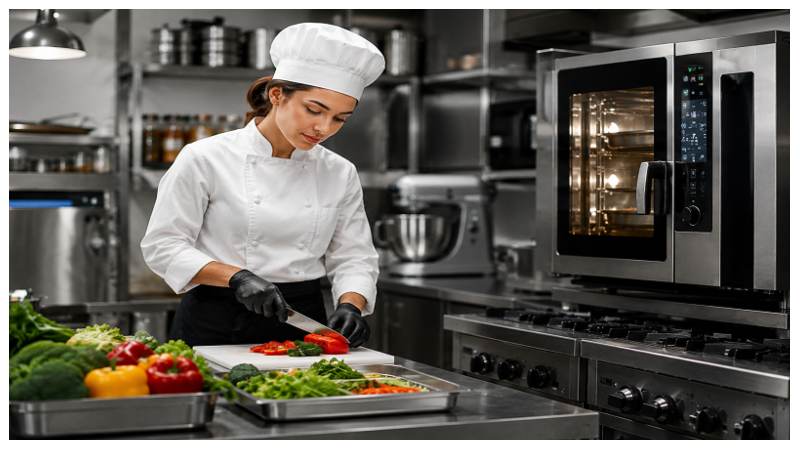
You can’t just have a good recipe to make a successful food business. The equipment in the background is directly involved with the taste, appearance, and performance of food every time it leaves the kitchen. One of the best ways to ensure food quality, minimize waste, and ensure repeat business is to invest in the right commercial foodservice equipment.
Why Equipment Quality Directly Affects Food Outcomes
Domestic appliances cannot handle the demands of a busy kitchen, especially when it comes to volume, speed, and precision. When equipment fails to keep up with daily operations, it produces unevenly cooked food, inconsistent portion sizes, and lower-quality results over time.
Commercial tools are designed to be used over and over and over again. They maintain temperatures well, recover heat quicker after opening the oven door, and distribute heat evenly over cooking surfaces. This reliability directly translates into predictable results, the basis of any strong food business.
The Link Between Equipment and Recipe Accuracy
As with any recipe, a recipe can only be as reliable as the equipment used to cook it. When an oven heats up in one corner, or the temperature of the oil in a fryer shoots up and then drops, the same recipe can result in different outcomes each time. Commercial Foodservice Equipment is available to get rid of this guesswork, giving chefs the assurance that a dish will taste the same each time they prepare it.
Key Types of Commercial Foodservice Equipment That Improve Quality
Food Preparation Equipment
Mixers, slicers, and food processors level food preparation. When chefs chop, prepare, and blend ingredients consistently, they create dishes that look and taste the same with every order. This consistency becomes especially important in high-volume kitchens, where staff may prepare dozens of identical meals during a single shift.
Holding and Serving Equipment
Completed food is maintained at safe, appetizing temperatures until it is served by steam tables, holding cabinets, and warming units. Inadequate holding equipment leads to loss of moisture, overcooking, and loss of texture in foods until ready to serve. Quality holding equipment helps to maintain the quality of a dish after it has left the cooking area.
How the Right Kitchen Setup Supports Long-Term Consistency
A good layout of a kitchen does more than just save space. It establishes a flurry of equipment, each supporting the next step in the food preparation process, minimizing bottlenecks and errors. When staff organize equipment logically and maintain it properly, they work more efficiently and complete each dish without leaving it to sit or rushing the cooking process.
Reducing Human Error Through Better Equipment
Supporting Food Safety Standards
Food quality is closely related to food safety. Kitchen staff must meet health code requirements by using equipment that cooks, holds, and stores food at safe temperatures, helping reduce the risk of foodborne illness. This will help safeguard the reputation of the company and customers.
Choosing the Right Commercial Foodservice Equipment for Your Business
Factors to Consider Before Purchasing
Cumbersome equipment can cause issues over time even though it performs well initially upon installation. Investing in equipment with a strong warranty and easily accessible service helps businesses minimize downtime when repairs become necessary.
Maintenance as Part of Quality Control
Even top-of-the-line commercial foodservice equipment needs routine maintenance to achieve its best performance. Small issues are avoided from becoming larger problems affecting food quality by scheduled cleaning, calibration checks, and part replacement. A kitchen with well-managed routine maintenance will yield more stable performance over time than a kitchen that only deals with maintenance when the equipment breaks down.
Conclusion
In the end, good food doesn’t just fall out of the sky. It’s all the outcome of capable hands and equipment that they know they can trust. Every regular oven, every good fryer, every reliable fridge is playing a quiet yet vital role in ensuring that the food tastes the same from a busy Friday night through to a slow Tuesday lunch. Nothing instills first-time customers like that!
Making the right investment in commercial foodservice equipment is more than just a buy. It’s a pledge of quality, safety, and efficiency that is rewarded daily while the doors are open to the public. Add a clever and practical Ckitchen design and your staff has the greatest opportunity to produce top-notch meals, meal after meal, without stress and without a lot of guesswork.
FAQs
What is commercial foodservice equipment?
Commercial foodservice equipment is equipment and tools used to prepare, cook, refrigerate and hold food in a high-volume kitchen setting for a professional foodservice operator.
How does equipment quality affect food consistency?
Good equipment keeps temperatures steady and works the same each time, helping to provide consistent cooking, storage and service for dishes in each and every order.
Why is a well-planned kitchen layout important?
Good equipment keeps temperatures steady and works the same each time, helping to provide consistent cooking, storage and service for dishes in each and every order.
How often should commercial kitchen equipment be maintained?
Different equipment will require different maintenance schedules; most manufacturers recommend a maintenance schedule of cleaning, calibration checks, and inspections at least every few months to avoid performance problems.
Can outdated equipment affect food safety?
Yes. Uncontrolled temperatures with the equipment make the problem of food safety violations and health risks to customers more likely.