
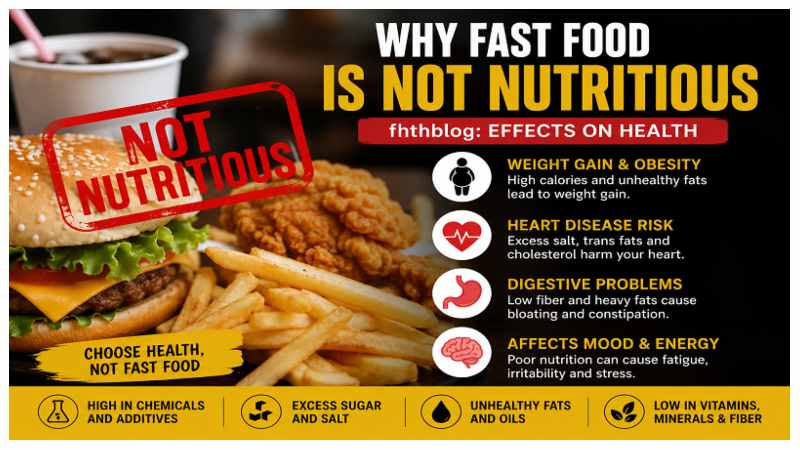
Fast food has become one of the most common food choices in modern society. Busy lifestyles, fast service, affordable prices, and easy availability have made fast food popular among people of all ages. Burgers, fries, pizzas, fried chicken, sugary drinks, and processed snacks are now part of many daily diets. While these foods may seem convenient and satisfying, they often lack the essential nutrients needed for good health.
The topic Why Fast Food Is Not Nutritious fhthblog: Effects on Health is important because many people consume fast food regularly without understanding its long-term effects on the body. Most fast food products are high in calories, unhealthy fats, sugar, and sodium while containing very little fiber, vitamins, and minerals. Eating these foods frequently can negatively affect physical health, mental well-being, and overall lifestyle habits.
Understanding the nutritional problems linked with fast food helps people make smarter eating decisions. This article explores why fast food is unhealthy, how it affects the body, and what healthier alternatives can support a balanced lifestyle.
Understanding Fast Food in Modern Life
Fast food is designed to be quick, convenient, and inexpensive. Many people choose fast food because it saves time and requires little effort. Restaurants and takeaway services make it easy to purchase ready-made meals within minutes.
Modern lifestyles have increased dependence on convenience foods. Long work hours, busy school schedules, and lack of time for cooking encourage people to choose fast food more often. Advertising and digital marketing also make fast food appear appealing and exciting.
However, convenience does not always mean quality. Many fast food meals are heavily processed and designed for taste rather than nutrition. They may satisfy hunger temporarily, but often fail to provide the nutrients required for long-term health.
Why Nutrition Matters for Health
Nutrition plays a vital role in maintaining overall health and body function. Nutritious foods provide the energy and nutrients needed for growth, repair, and daily activities.
Healthy nutrition supports:
- Strong immunity
- Healthy body weight
- Better concentration
- Good digestion
- Stable energy levels
- Mental well-being
Balanced nutrition is especially important because food directly affects how people feel physically and mentally each day.
Why Fast Food Is Not Nutritious fhthblog: Effects on Health
Fast food is generally considered unhealthy because it often contains excessive calories and harmful ingredients while lacking essential nutrients.
Many fast food meals are:
- Highly processed
- High in unhealthy fats
- Loaded with sugar and salt
- Low in vitamins and fiber
These foods are designed to taste good and encourage repeated consumption, but they do not support balanced nutrition.
Nutritious foods provide the body with vitamins, minerals, protein, fiber, and healthy fats. Fresh fruits, vegetables, whole grains, and lean proteins support overall wellness.
Fast food, however, usually focuses on flavor, convenience, and shelf life rather than nutritional quality.
Key differences include:
| Nutritious Food | Fast Food |
|---|---|
| Fresh ingredients | Processed ingredients |
| Rich in nutrients | Low nutritional value |
| Balanced meals | Excess calories |
| Natural flavors | Artificial additives |
| Supports long-term health | May increase disease risk |
Understanding these differences helps people make healthier food decisions.
What Makes Fast Food Unhealthy
Several factors contribute to the poor nutritional quality of fast food.
High Calories and Low Nutrition
Fast food often contains large amounts of calories without providing enough nutrients.
Calories provide energy, but the body also requires nutrients such as:
- Vitamins
- Minerals
- Fiber
- Protein
Fast food meals may contain excessive calories from sugar and fat while lacking these important nutrients.
This imbalance can lead to overeating and poor overall nutrition.
Processed Ingredients and Additives
Most fast food products contain processed ingredients that are altered to improve flavor, texture, or shelf life.
Common additives include:
- Artificial preservatives
- Flavor enhancers
- Food coloring
- Stabilizers
Highly processed foods are usually lower in nutrients compared to fresh foods.
Frequent consumption of processed foods may contribute to long-term health problems.
Oversized Portion Sizes
Fast food restaurants often serve very large portions. These oversized meals encourage excessive calorie intake.
Large portions may include:
- Extra fries
- Sugary drinks
- Large desserts
Eating oversized portions regularly can increase weight gain and unhealthy eating habits.
Common Ingredients Found in Fast Food
Fast food often contains ingredients that should only be consumed in moderation.
Excess Sugar and Salt
Many fast foods contain high amounts of sugar and sodium.
Too much sugar may contribute to:
- Weight gain
- Diabetes risk
- Tooth decay
Excess salt may increase:
- Blood pressure
- Water retention
- Heart disease risk
Many processed sauces and drinks contain hidden sugars and sodium.
Unhealthy Fats and Oils
Fast food frequently contains unhealthy fats such as trans fats and saturated fats.
These fats are often found in:
- Fried foods
- Processed meats
- Fast food desserts
High intake of unhealthy fats may raise cholesterol levels and increase heart disease risk.
Artificial Flavors and Preservatives
Artificial ingredients help improve taste and preserve freshness.
However, these additives provide little or no nutritional benefit. Fresh foods are generally healthier because they contain fewer artificial chemicals.
Low Fiber Content
Fiber is essential for healthy digestion and feeling full after meals.
Fast food is often low in fiber because it contains refined grains and limited vegetables.
Low fiber intake may lead to:
- Digestive discomfort
- Increased hunger
- Poor gut health
Whole foods and fresh produce provide much more fiber.
Negative Effects of Fast Food on Health
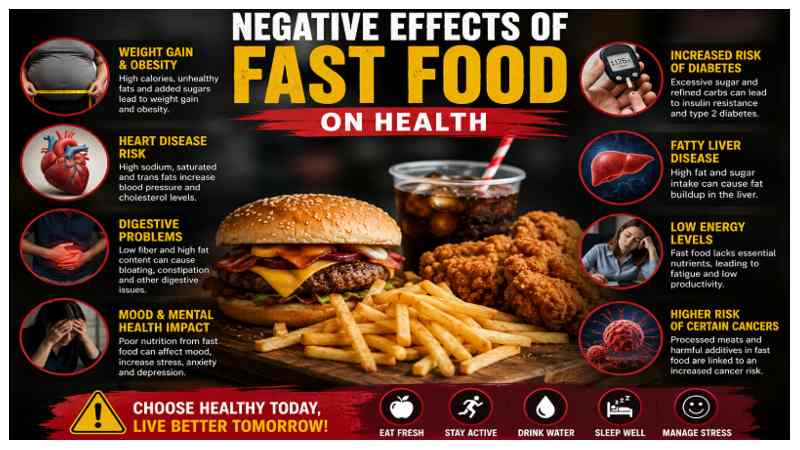
Regular fast food consumption can affect many areas of health.
Weight Gain and Obesity
Fast food meals are often calorie-dense and high in unhealthy fats and sugars.
Frequent consumption may lead to:
- Excess calorie intake
- Increased body fat
- Obesity risk
Obesity increases the likelihood of many serious health conditions.
Increased Risk of Heart Disease
Excessive sodium and unhealthy fats may damage heart health over time.
Frequent fast food consumption can contribute to:
- High blood pressure
- High cholesterol
- Artery problems
These issues increase the risk of heart disease and stroke.
Digestive Problems and Low Energy
Fast food often lacks nutrients and fiber needed for healthy digestion.
People who regularly eat fast food may experience:
- Bloating
- Constipation
- Fatigue
- Sluggishness
Balanced meals provide more stable energy and better digestive support.
Impact on Mental Health and Mood
Diet can influence mental well-being.
Poor eating habits may affect:
- Mood stability
- Stress levels
- Concentration
- Emotional balance
Some research suggests that diets high in processed foods may increase symptoms of anxiety and depression.
Nutritious foods support healthier brain function and emotional wellness.
Fast Food and Children’s Health
Children are especially vulnerable to unhealthy eating habits.
Frequent fast food consumption in children may contribute to:
- Childhood obesity
- Poor concentration
- Nutrient deficiencies
- Unhealthy eating patterns later in life
Teaching healthy eating habits early is important for long-term wellness.
Why Fast Food Lacks Proper Nutrition
Fast food is designed mainly for convenience and taste rather than balanced nutrition.
Low Vitamin and Mineral Content
Fast food often lacks essential nutrients such as:
- Vitamin C
- Calcium
- Iron
- Potassium
Without these nutrients, the body may struggle to maintain optimal health.
Lack of Fresh Ingredients
Many fast food products rely on frozen or heavily processed ingredients instead of fresh foods.
Fresh ingredients generally contain more nutrients and fewer additives.
Poor Balance of Nutrients
Balanced meals should include:
- Lean protein
- Healthy fats
- Fiber
- Vitamins and minerals
Most fast food meals are overloaded with processed carbs and harmful fats, offering very little nutritional balance for the body.
Fast Food and Daily Lifestyle
Fast food habits can strongly influence everyday routines and overall lifestyle.
How Fast Food Affects Energy Levels
Sugary drinks and refined carbohydrates may create quick bursts of energy followed by sudden crashes.
This can lead to:
- Tiredness
- Hunger cravings
- Difficulty focusing
Balanced meals provide steadier energy throughout the day.
Influence on Eating Habits
Regular fast food consumption may encourage unhealthy habits such as:
- Overeating
- Frequent snacking
- Preference for salty or sugary foods
Over time, these habits can become difficult to change.
Long-Term Health Risks
Long-term fast food consumption may increase the risk of:
- Type 2 diabetes
- Obesity
- Heart disease
- High blood pressure
- Digestive disorders
Healthier eating habits can significantly reduce these risks.
Hidden Dangers of Sugary Drinks
Sugary beverages are commonly included with fast food meals.
These drinks often contain large amounts of added sugar and empty calories.
Frequent consumption may contribute to:
- Weight gain
- Diabetes risk
- Tooth decay
- Energy crashes
Water, fresh juices, or low-sugar drinks are healthier alternatives.
Healthy Alternatives to Fast Food
Healthier food choices can still be simple, affordable, and satisfying.
Cooking Fresh Meals at Home
Home cooking provides better control over ingredients and portion sizes.
Benefits include:
- Better nutrition
- Fresher ingredients
- Less unhealthy fat and salt
- More balanced meals
Cooking at home often supports healthier eating habits.
Choosing Balanced Snacks
Healthy snacks help reduce unhealthy cravings.
Examples include:
- Fruit
- Yogurt
- Nuts
- Vegetable sticks
- Whole-grain snacks
Balanced snacks provide steady energy without excessive calories.
Quick Healthy Recipes for Busy Days
Healthy meals do not need to be difficult or time-consuming.
Quick healthy options include:
- Rice and vegetable bowls
- Grilled chicken wraps
- Stir-fried vegetables
- Simple salads
- Homemade sandwiches
These meals are practical for busy lifestyles.
Importance of Drinking Enough Water
Hydration is an important part of healthy eating.
Replacing sugary drinks with water can:
- Improve digestion
- Reduce calorie intake
- Support energy levels
- Improve overall health
Water also helps the body function efficiently.
Tips to Reduce Fast Food Consumption
Reducing fast food intake can improve health significantly.
Meal Planning at Home
Planning meals in advance helps avoid unhealthy last-minute food choices.
Meal planning saves:
- Time
- Money
- Stress
It also encourages healthier eating habits.
Preparing Food in Advance
Preparing ingredients ahead of time makes healthy cooking easier.
Examples include:
- Chopping vegetables
- Cooking grains in advance
- Preparing healthy snacks
Preparation reduces dependence on convenience foods.
Choosing Healthier Restaurant Options
When eating out, healthier choices are still possible.
Tips include:
- Choosing grilled instead of fried foods
- Avoiding oversized portions
- Selecting water instead of sugary drinks
- Adding vegetables to meals
Small changes can improve meal quality.
Benefits of Avoiding Excess Fast Food
Reducing fast food consumption offers many long-term benefits.
Better Physical Health
Nutritious foods support:
- Healthy weight management
- Better digestion
- Stronger immunity
- Improved heart health
Healthy eating improves overall body function.
Improved Mood and Energy
Balanced meals help maintain steady energy and emotional balance.
People often feel more active and focused when eating healthier foods regularly.
Stronger Healthy Eating Habits
Avoiding excessive fast food encourages lifelong healthy habits and better food awareness.
Better Sleep Quality
Healthy eating habits may also improve sleep quality.
Heavy fast-food meals late at night can affect digestion and sleep comfort.
Nutritious meals support healthier sleep patterns.
Frequently Asked Questions (FAQ)
Is Fast Food Always Unhealthy?
Not all fast food is unhealthy, but many fast food meals contain excessive calories, sugar, salt, and unhealthy fats.
Why Do People Eat Fast Food Frequently?
People often choose fast food because it is convenient, affordable, quick, and heavily advertised.
What Are Better Alternatives to Fast Food?
Homemade meals, salads, grilled foods, fresh fruit, and balanced snacks are healthier alternatives.
How Often Should Fast Food Be Eaten?
Fast food should be consumed occasionally and balanced with nutritious meals and healthy eating habits.
Can Fast Food Affect Mental Health?
Poor nutrition may influence mood, energy, stress levels, and concentration over time.
Conclusion
Making Smarter Food Choices for Better Health
Understanding Why Fast Food Is Not Nutritious fhthblog: Effects on Health helps people make informed food decisions. Although fast food may be convenient, regular consumption can negatively affect both physical and mental health.
Choosing fresh and balanced meals supports long-term wellness and better daily energy.
Building Healthy Eating Habits for the Future
Healthy eating habits begin with small daily improvements. Cooking at home, reducing processed foods, drinking enough water, and choosing nutritious ingredients can lead to lasting health benefits.
By focusing on balanced nutrition and mindful eating, people can build a healthier lifestyle and improve their overall quality of life for the future.