
Industrial mixing is one of the most critical stages in manufacturing across sectors ranging from food processing and pharmaceuticals to agriculture and specialty chemicals. Choosing the right blending equipment can determine the consistency, quality, and efficiency of an entire production line. For many operations, acquiring a used ribbon blender represents one of the most cost-effective and operationally sound decisions a plant manager can make. Rather than committing to the full capital expenditure of new machinery, businesses are increasingly turning to refurbished and pre-owned process equipment to meet their production demands without sacrificing performance.
Understanding the Ribbon Blender and Its Industrial Role
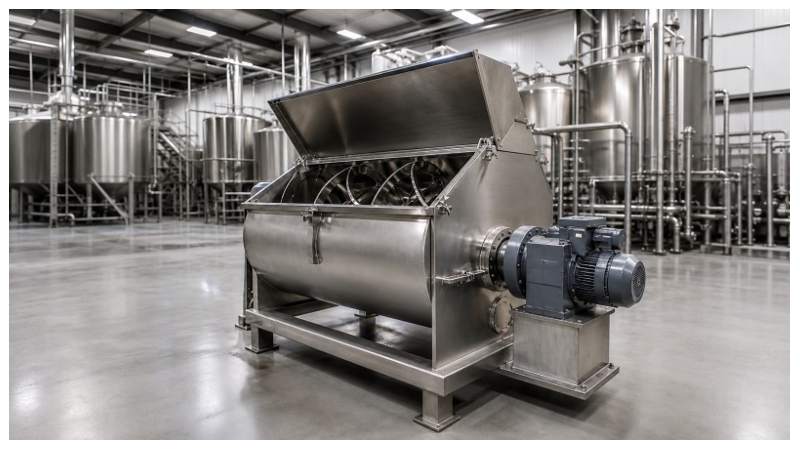
A ribbon blender is a horizontal mixing vessel that uses a double helical ribbon agitator to move materials both radially and laterally within a trough. This dual-directional movement ensures thorough, homogeneous blending of dry powders, granules, and semi-moist materials. The inner ribbon moves material in one direction while the outer ribbon moves it in the opposite direction, creating a continuous folding and counter-flow action that achieves uniform mixing in relatively short cycle times.
Industries that rely heavily on ribbon blenders include animal feed production, bakery ingredient blending, pharmaceutical powder mixing, cosmetics manufacturing, and chemical compounding. The versatility of this equipment type makes it one of the most widely used mixing technologies in the world, and consequently, a robust secondary market exists for high-quality pre-owned units.
The Economic Case for Pre-Owned Process Equipment
New industrial mixing equipment can represent a significant capital outlay, particularly for small to mid-sized manufacturers operating under tight budget constraints. A used ribbon blender, sourced from a reputable supplier, can deliver the same functional performance as a new unit at a fraction of the cost. This allows businesses to redirect capital toward other operational priorities such as workforce development, facility upgrades, or raw material procurement.
Beyond the initial purchase price, pre-owned equipment often comes with shorter lead times. New machinery may require months of manufacturing and delivery time, whereas a refurbished unit can frequently be inspected, purchased, and installed within weeks. For operations scaling up quickly or replacing failed equipment, this speed advantage is invaluable.
Evaluating Quality in the Used Equipment Market
Not all pre-owned equipment is created equal, and due diligence is essential when sourcing a used ribbon blender. Buyers should assess the condition of the ribbon agitator itself, looking for signs of wear, corrosion, or deformation that could compromise mixing efficiency. The trough lining, shaft seals, and drive components should all be inspected carefully. Reputable suppliers will provide full equipment histories, including previous applications, maintenance records, and any refurbishment work completed prior to resale.
Material compatibility is another critical consideration. Stainless steel construction is preferred for food-grade and pharmaceutical applications, while carbon steel units may be appropriate for agricultural or chemical blending where contamination risk is lower. Buyers should also verify that the unit’s capacity — typically measured in cubic feet or liters — aligns with their production batch requirements.
Sourcing from International Process Plants
When it comes to sourcing reliable pre-owned mixing equipment, working with an established industrial equipment dealer is essential. International Process Plants offers an extensive inventory of process equipment for a wide range of industries. If you are in the market for a used ribbon blender, their catalogue includes thoroughly inspected units from leading manufacturers, giving buyers confidence in both the equipment’s condition and its suitability for demanding production environments. Their team of specialists can assist with equipment selection, technical specifications, and logistics, making the procurement process straightforward and transparent.
Ribbon Blenders in the Pharmaceutical and Chemical Sectors
The pharmaceutical industry places exceptionally high demands on mixing equipment. Uniformity of active pharmaceutical ingredients (APIs) within a blend is not merely a quality preference — it is a regulatory requirement. Ribbon blenders used in pharmaceutical applications must meet stringent hygiene standards, including smooth internal surfaces, minimal dead zones, and easy cleanability to prevent cross-contamination between batches.
The industry is also evolving in terms of the solvents and processing media it uses. Research into safer alternatives to toxic solvents in pharmaceutical manufacturing is gaining momentum, with water-based reactor systems offering promising results. As formulation chemistry shifts, the equipment used in blending and mixing operations must adapt accordingly, reinforcing the importance of selecting versatile, well-maintained machinery that can accommodate evolving process requirements.
Maintenance and Longevity of Ribbon Blending Equipment
One of the most compelling arguments for investing in a quality used ribbon blender is the inherent durability of the equipment type. Ribbon blenders are mechanically straightforward, with relatively few moving parts compared to more complex mixing technologies. This simplicity translates to lower maintenance costs and greater ease of repair. Replacement parts such as ribbon agitators, shaft seals, and drive belts are widely available, and most maintenance tasks can be performed by in-house engineering teams without specialist intervention.
Establishing a preventive maintenance schedule is key to maximizing the operational lifespan of any blending equipment. Regular inspection of the ribbon for wear, lubrication of bearings, and monitoring of motor performance will help identify potential issues before they escalate into costly downtime. Many operations find that a well-maintained used ribbon blender can deliver years of reliable service, making the initial investment even more economical over time.
Preparing Your Facility for New Equipment Installation
Acquiring the right blending equipment is only part of the equation. Preparing your facility for installation is equally important. Assess the floor space, structural load capacity, electrical supply, and ventilation before bringing the ribbon blender to the site. Proper site preparation ensures a smooth installation and minimizes the risk of operational disruptions once the equipment is operational. commissioned.
The principles of thorough preparation apply across many industries. Just as preparing a yard for new landscaping requires careful planning, soil assessment, and groundwork before any planting begins, preparing an industrial facility for new process equipment demands a structured approach that accounts for every logistical and technical variable. Skipping this preparation phase often leads to delays, additional costs, and suboptimal equipment performance.
Conclusion: Making the Right Mixing Equipment Decision
The decision to invest in a used ribbon blender is one that balances financial prudence with operational necessity. For manufacturers across food, pharmaceutical, chemical, and agricultural sectors, pre-owned ribbon blenders offer a proven, cost-effective solution for achieving consistent, high-quality blending results. By sourcing from reputable suppliers, conducting thorough equipment inspections, and preparing facilities properly for installation, businesses can unlock significant value from the secondary equipment market.
As industries continue to evolve — adopting greener chemistries, scaling production, and optimizing costs — the role of reliable, well-maintained mixing equipment will only grow in importance. A used ribbon blender, chosen wisely and maintained diligently, is far more than a budget compromise. It is a strategic asset that supports long-term production goals.