
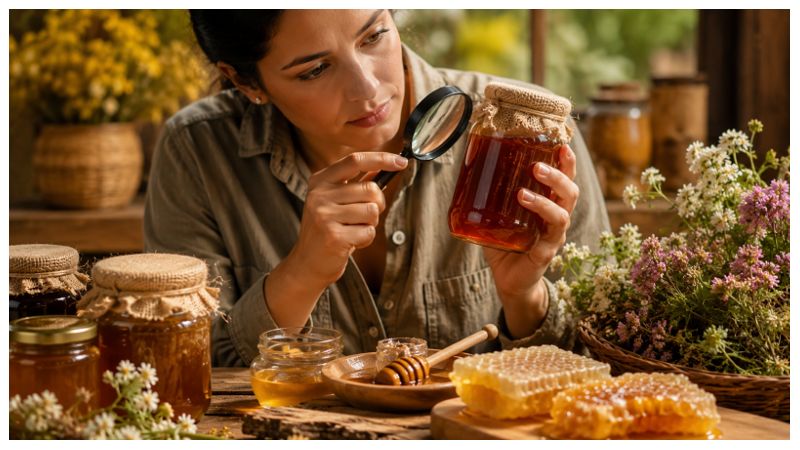
Real mad honey UK is a distinctive product associated with specific rhododendron species and traditional harvesting regions. Because its unusual reputation has created growing consumer interest, it is important to understand how to evaluate its origin, labeling, quality, and seller information before making a purchase.
Unlike ordinary honey, mad honey may contain naturally occurring grayanotoxins derived from certain rhododendron plants. The concentration can vary between batches, so authenticity is not simply about finding honey with a particular color or taste. Buyers should focus on traceable sourcing and credible product information while also understanding the potential safety concerns.
Authenticity begins with transparency.
Understand What Real Mad Honey Is
Mad honey is traditionally produced when bees collect nectar from certain rhododendron flowers containing grayanotoxins. It is particularly associated with regions such as parts of Nepal and Turkey, where suitable rhododendron species grow naturally.
The presence of these plant-derived compounds is what distinguishes genuine mad honey from conventional honey. However, not every honey described as “mad honey” necessarily comes from the same botanical source or contains the same concentration of grayanotoxins.
This variation makes responsible purchasing especially important. A seller should be able to provide meaningful information about where the product originated and how it was harvested.
Check the Geographic Origin
Geographic origin is one of the most useful factors to examine when evaluating mad honey. Traditional mad honey is strongly associated with specific mountainous regions where rhododendron species grow naturally.
Look for detailed information rather than vague statements such as “mountain honey” or “wild honey.” A trustworthy product description should ideally identify the country or region of origin and provide information about the producer or harvesting area.
The location should make sense.
If a product makes extraordinary claims about being rare or authentic but provides no meaningful information about its source, buyers should approach it cautiously.
Examine the Product Label Carefully
A product label can provide important clues about how transparent a seller is. Look for the product’s ingredients, net quantity, country of origin, producer information, batch details, storage instructions, and relevant warnings.
Labels should not rely entirely on dramatic health claims to sell the product. Descriptions that focus on supposed miracle effects rather than providing basic information about the honey itself should raise questions.
Clear labeling supports informed purchasing.
Depending on where you live, food-labeling requirements may differ, so consumers should also familiarize themselves with the relevant local regulations governing imported or specialty honey products.
Look for Information About the Harvest
Authentic specialty honey generally has a story behind its production. Reliable sellers may provide information about the harvesting season, region, floral source, beekeeper, or processing methods.
Mad honey is particularly connected to its botanical environment, so information about the rhododendron source can be valuable. While consumers cannot always independently verify every claim, greater transparency makes it easier to evaluate whether the product description is credible.
Ask where the honey came from.
A seller who cannot provide even basic sourcing information may not be the best choice for a specialized product.
Don’t Rely on Color Alone
Some people assume that authentic mad honey must have a particular dark, reddish, or amber appearance. In reality, honey’s color can vary depending on floral source, geography, processing, and other factors.
This means appearance alone cannot reliably establish authenticity. Two genuine products may look different, while a counterfeit or mislabeled product could be made to resemble a commonly expected color.
Visual inspection is useful, but it is not proof.
Consumers should evaluate appearance together with sourcing, labeling, supplier reputation, and other available information.
Be Careful With Taste-Based Claims
Mad honey is often described as having a distinctive bitter, earthy, sharp, or intense flavor. However, taste can vary considerably between batches.
A seller claiming that a particular flavor proves authenticity should therefore be treated cautiously. Taste is subjective, and it cannot reliably determine the concentration of grayanotoxins or establish whether a product genuinely originated from rhododendron nectar.
Flavor is part of the experience, not a laboratory test.
Avoid purchasing a product simply because its taste is described as unusually strong or “powerful.”
Research the Seller’s Reputation
The reputation of the supplier can be just as important as the product description. Before buying, research the seller and look for consistent information about their business, sourcing practices, customer service, and product policies.
Reviews can provide useful insight, although they should not be treated as definitive proof of authenticity. Look for detailed customer experiences rather than relying solely on a large number of generic ratings.
Transparency builds trust.
A seller specializing in authentic products should generally be willing to answer reasonable questions about origin, ingredients, harvesting, packaging, and safety.
Be Wary of Extraordinary Health Claims
Mad honey has developed a reputation for producing unusual physiological effects because of its potential grayanotoxin content. Some sellers may use this reputation to make exaggerated claims about energy, vitality, sexual performance, or disease treatment.
Consumers should be especially skeptical of claims that a honey product can cure medical conditions or deliver guaranteed therapeutic results.
Marketing is not evidence.
The presence of naturally occurring compounds does not automatically establish a product as a safe or effective medical treatment.
Understand the Safety Concerns
Authentic mad honey can contain grayanotoxins, which distinguish it from ordinary honey and create important safety considerations. These compounds can affect blood pressure, heart rate, and the nervous system when consumed in sufficient amounts.
Potential symptoms of grayanotoxin poisoning include dizziness, nausea, vomiting, sweating, weakness, low blood pressure, and changes in heart rate. The concentration can vary between batches, making the effects difficult to predict.
This is why authenticity should not be viewed simply as a way to find a “stronger” honey.
People with cardiovascular conditions, blood-pressure concerns, or medication use should seek appropriate professional advice before consuming products that may contain grayanotoxins.
Consider Independent Testing When Available
For consumers seeking greater assurance, independent laboratory testing can provide more useful information than appearance, taste, or marketing descriptions. Testing may help identify certain compounds and provide information about product composition.
Not every seller will offer laboratory reports, and the type and quality of testing can vary. If a supplier provides a certificate of analysis, buyers should check that it identifies the product or batch being purchased and comes from a credible laboratory.
Testing provides stronger evidence than advertising.
However, a laboratory report should still be considered alongside reliable sourcing and proper labeling.
Avoid Suspiciously Cheap or Overhyped Products
Price alone does not prove authenticity, but unusually cheap products marketed as rare, premium mad honey may deserve additional scrutiny. Genuine specialty products can involve particular harvesting conditions, transportation requirements, and sourcing challenges.
Likewise, extremely expensive products are not automatically authentic. Some sellers may use scarcity or dramatic claims to justify inflated prices.
Compare products carefully rather than assuming price equals quality.
A balanced evaluation of sourcing, documentation, supplier reputation, and product information is more useful than focusing on cost alone.
Ask Questions Before You Buy
If product information is incomplete, contacting the seller can help you make a better decision. Ask where the honey was harvested, what floral source is associated with it, whether the product has batch information, and whether any testing documentation is available.
Pay attention not only to the answer but also to how clearly the seller responds. Evasive answers, unsupported health claims, or pressure to purchase immediately can be warning signs.
Good sellers should welcome reasonable questions.
Conclusion
Identifying authentic real mad honey requires more than checking its color, taste, or packaging. Buyers should examine the geographic origin, floral source, labeling, harvesting information, supplier reputation, and available testing documentation before making a purchase.